Loading…
Back to blog
MalaysiaPenangTransportLong-term TravelFamily
What It's Really Like Waiting at Penang Sentral Bus Terminal with an 8 Year Old
Jax Family Travels·May 27, 2026· 5 min read
We visited May 2026
There's a particular kind of madness that only reveals itself in bus terminals across South East Asia.
Not the cinematic kind people imagine back home. No chickens. No chaos. Just fluorescent lighting, lukewarm air-conditioning, a half-functional departure board, and dozens of perfectly normal people collectively accepting a level of uncertainty that would cause an average British commuter to file a formal complaint.
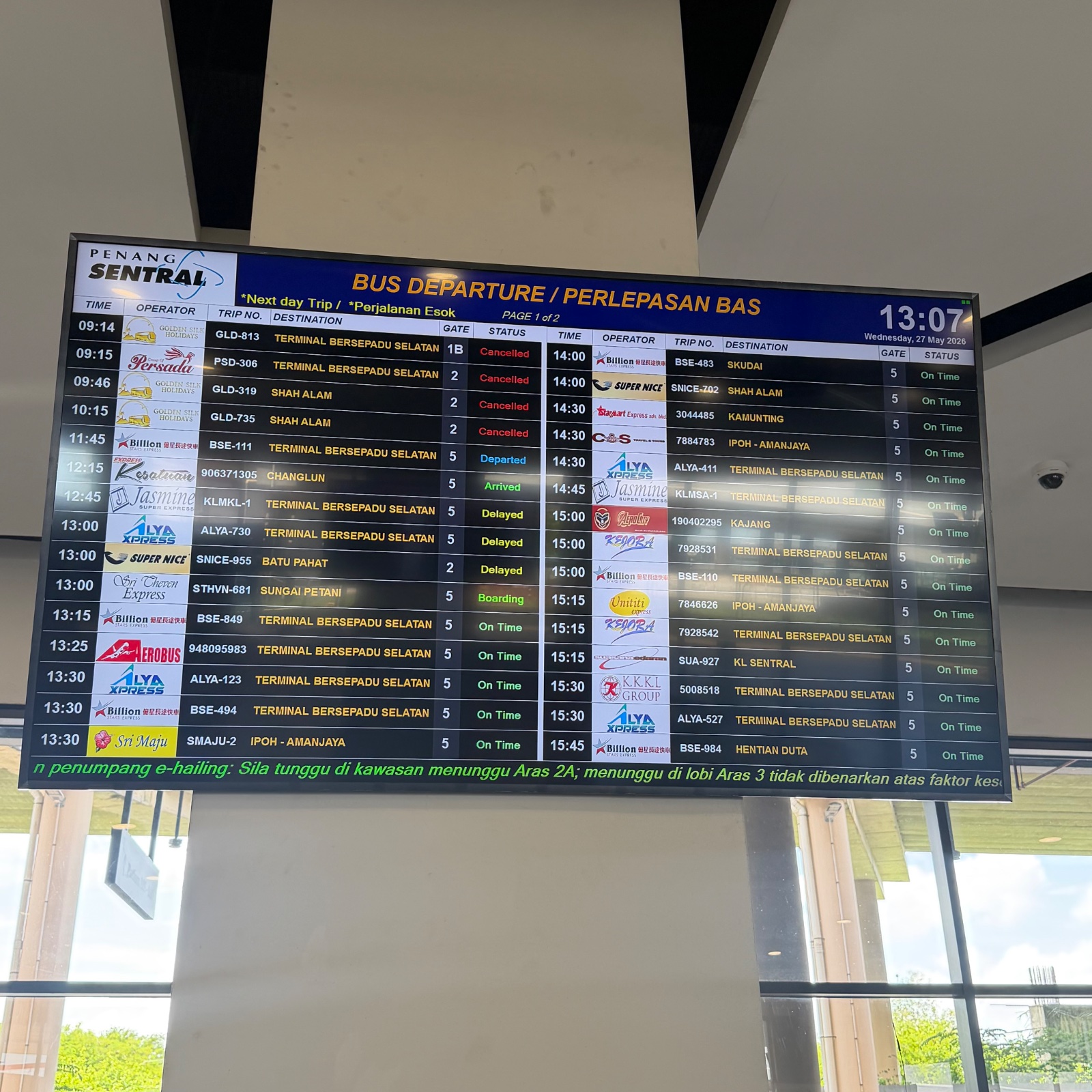
We were at Sentral bus terminal Penang, waiting for a coach from Butterworth to Kuala Perlis. Scheduled departure: 12:15pm. Cost: around 150 MYR total for the three of us, about £26. Simple enough on paper.
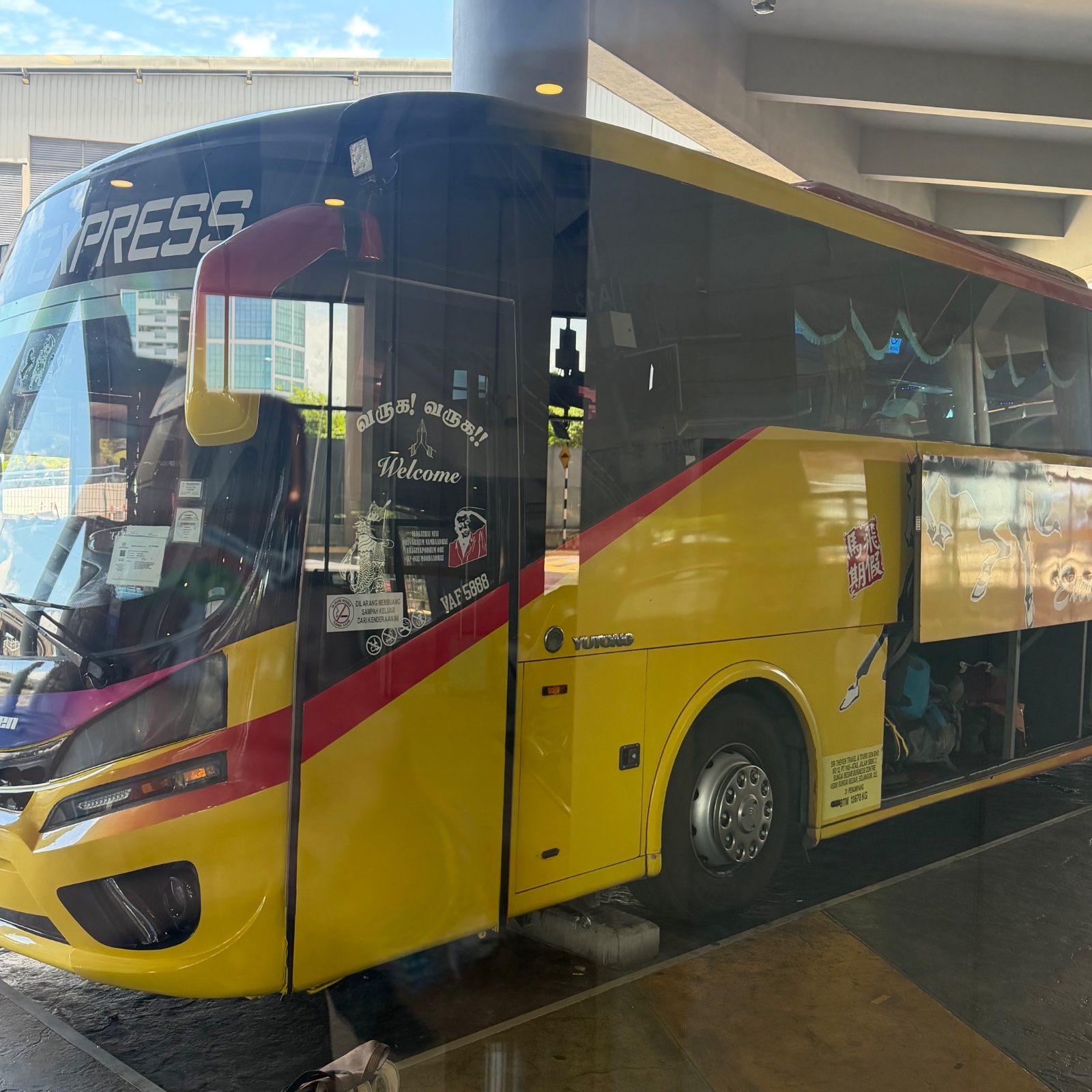
By 13:30, no coach. No announcement. No delay notice. Nothing on the board except the word "ARRIVED", which was especially impressive given the bus had apparently achieved a higher spiritual plane and no longer needed to physically exist.
If you asked staff where it was, you got the same vague shrug delivered with the calm confidence of someone explaining weather patterns.
"Maybe coming soon."
"How soon?"
"Soon."
Not angry. Not rude. Just entirely unbothered by concepts western civilisation treats as sacred. Time. Schedules. Information.
How We Ended Up There Early
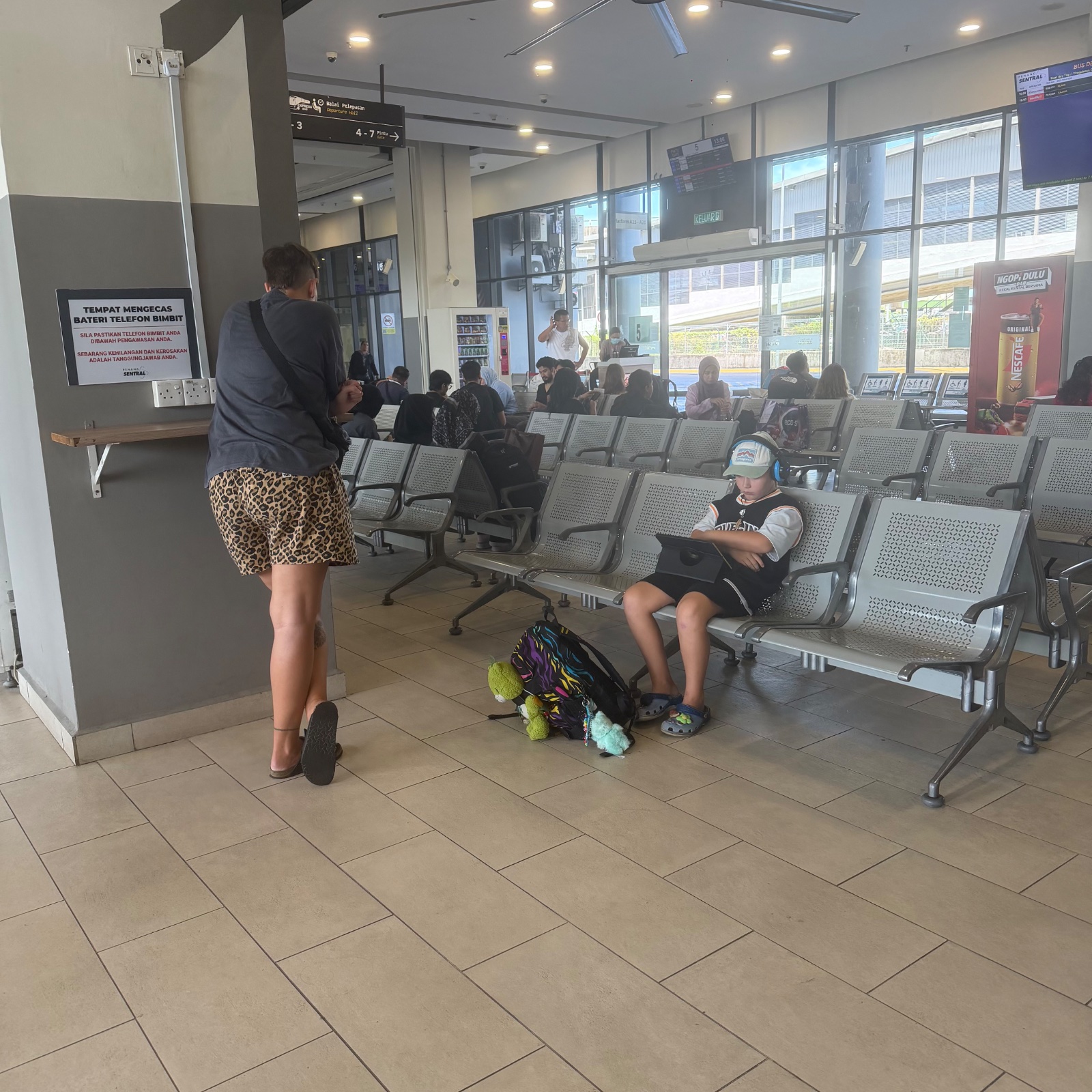
We'd gone down around 11:30 because passengers are told to arrive 30 minutes before departure. In reality we'd reached the terminal almost an hour before that, because the Grab from our George Town apartment had flown through unusually empty roads. Eid-ul-Adha public holiday. Normally George Town traffic moves with all the urgency of melting cheese. Not today.
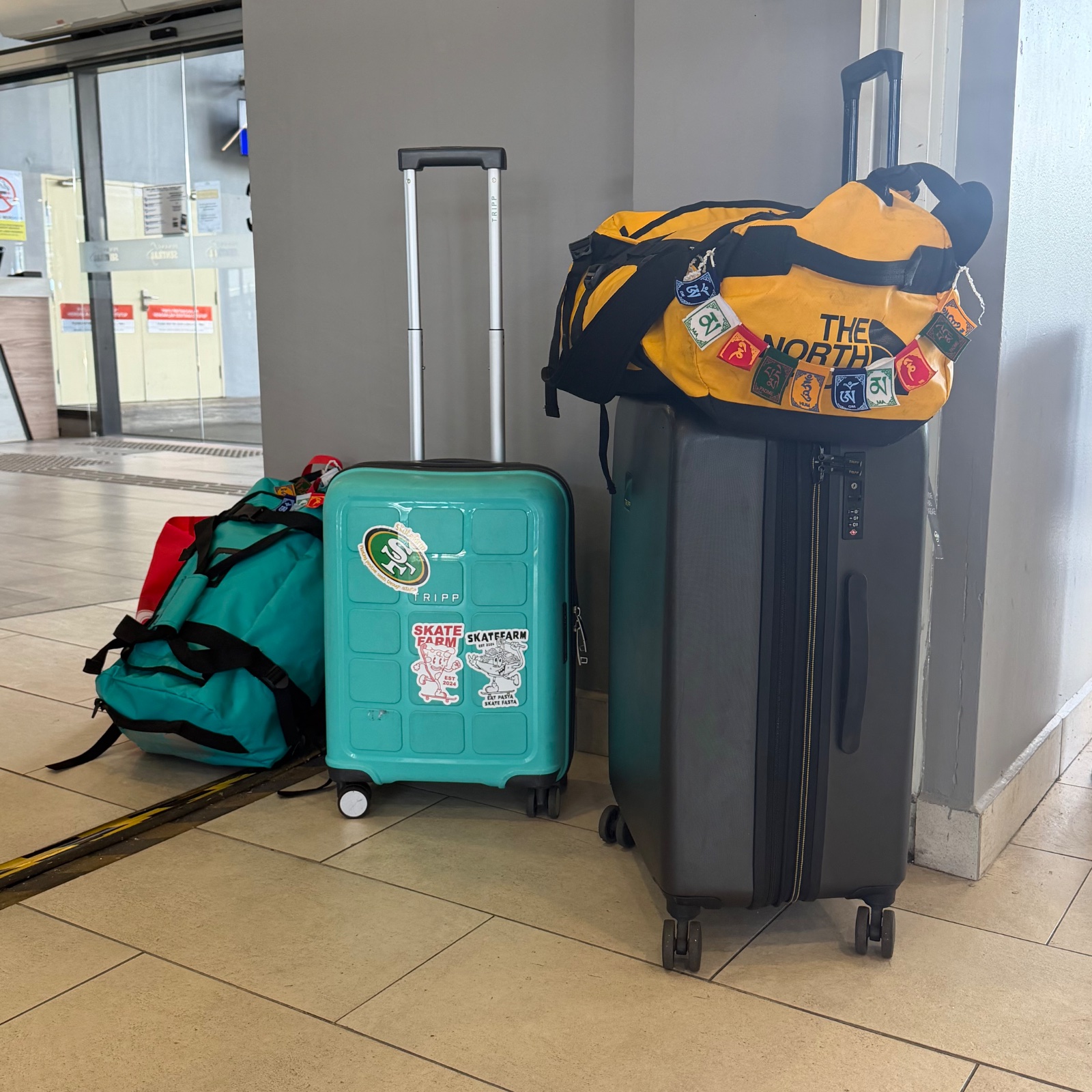
So there we were. Three people. An eight-year-old. Bags. Fully-charged electronics. And absolutely no indication whether we'd be leaving in twenty minutes, two hours, or sometime after the collapse of modern civilisation.
And honestly? It was fine.
Jax sat watching his iPad. Then read. Then did some schooling. Then went back to his iPad. Bec and I caught up on admin. Music in one ear. Journals open. Occasional glances toward gate 5 like sailors scanning the horizon.
Nobody pacing. Nobody dramatically marching back to the desk every four minutes demanding updates.
The Thing People Misunderstand About This Kind of Travel
They think the hard part is the buses. The ferries. The overnight trains. The language barriers.
It isn't.
The hard part is expectation.
If you build your plans like a tightly wound Swiss watch, South East Asia will snap the spring by lunchtime. You cannot book a coach that arrives ten minutes before your ferry leaves and expect emotional stability. That's how you end up spiralling.
Get new guides and posts in your inbox
No spam, unsubscribe any time.
Be the first to like this

No comments yet