Loading…
Back to blog
MoroccoTafraouteAnti AtlasRoad TripsFamily Travel
The Painted Rocks In Morocco Are Even Stranger In Real Life
Jax Family Travels·May 21, 2026· 4 min read
We visited September 2025
We nearly turned around before we even got there.
The Painted Rocks, or Les Roches Peintes, sit out in the Anti Atlas Mountains near Tafraoute, between Tiznit and Taroudant, and getting to them involved about 30 minutes of driving down a rough cobbled stone track that genuinely felt like a bad decision the further we went.
At one point Oli slowed the car almost to walking pace because the road was so uneven we were convinced we were about to lose a tyre somewhere in the Moroccan desert.
Jax, meanwhile, was fully committed to the adventure by this point and kept announcing things like, “Imagine explaining this to the hire car company.”
Which, to be fair, felt increasingly possible.
We’d seen the Painted Rocks on social media before our Morocco trip and immediately added them to the list because we’re very easily persuaded by random things in the middle of nowhere. Giant painted boulders in the mountains? Fine. We’re in.
Having a hire car made this sort of detour really easy. It’s one of the things we loved most about travelling around Morocco long term. You can stop at weird places just because you feel like it.
And honestly, this one was worth the slightly stressful drive.
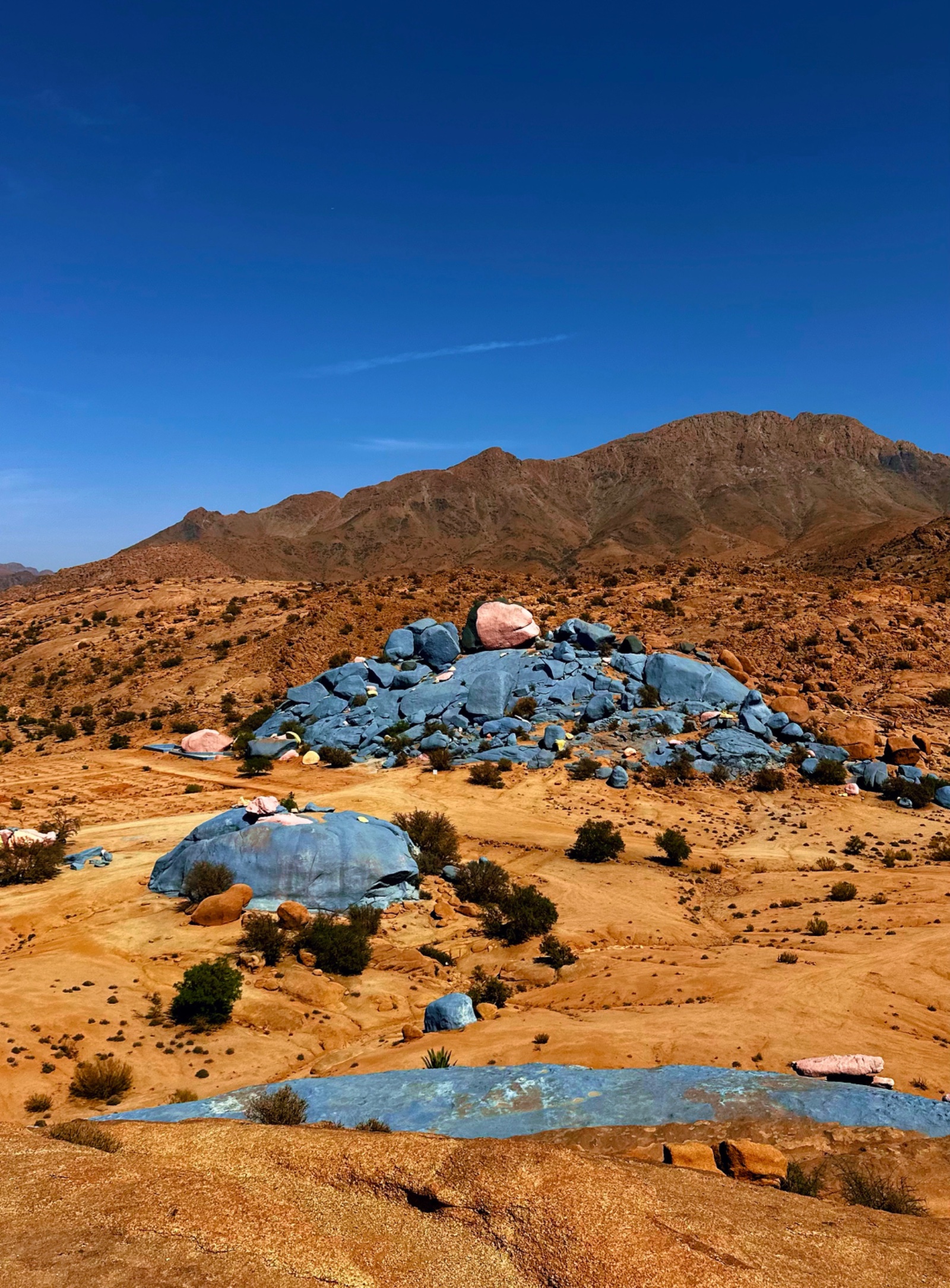
When we finally arrived, it was properly impressive in a way photos don’t really prepare you for.
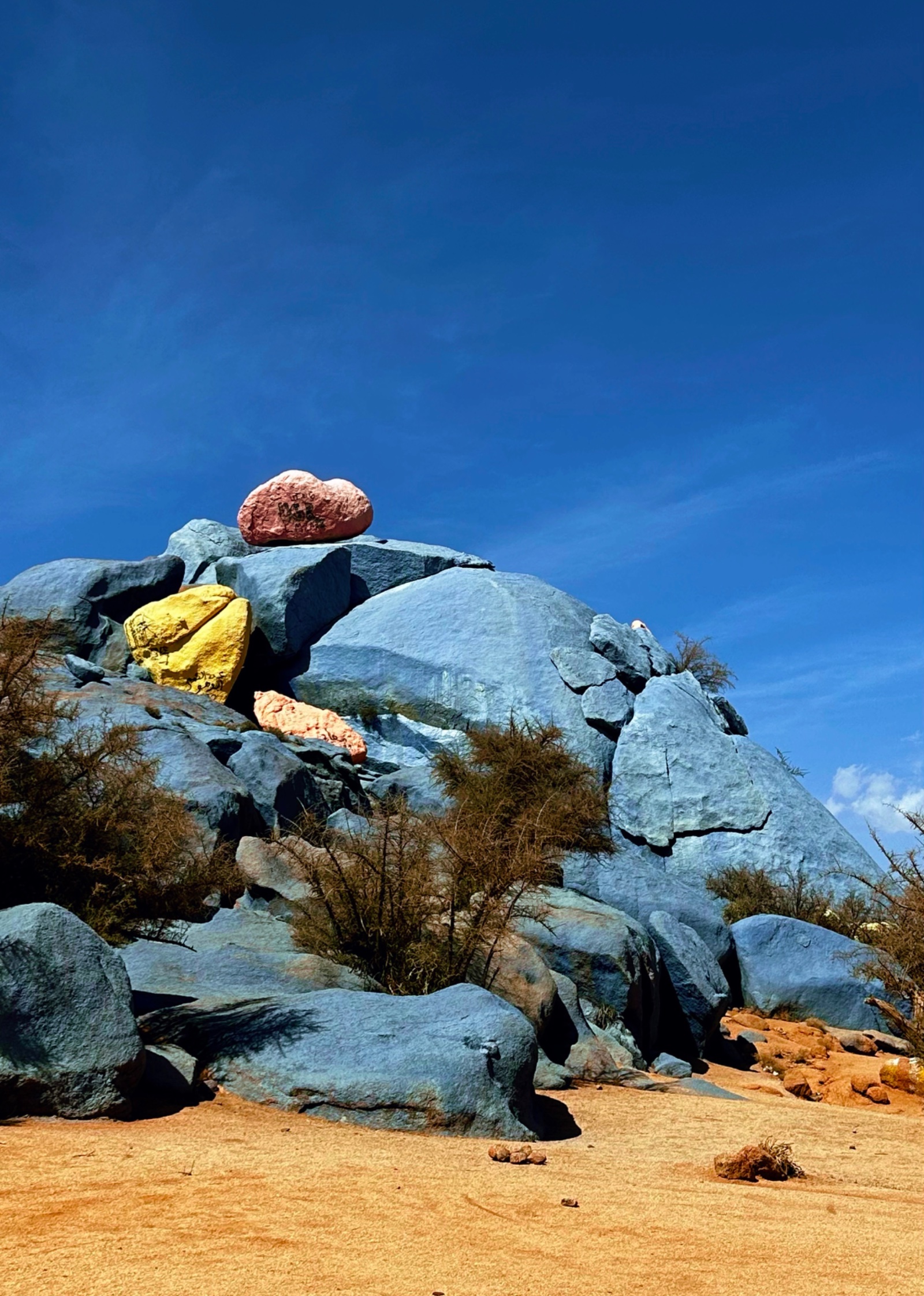
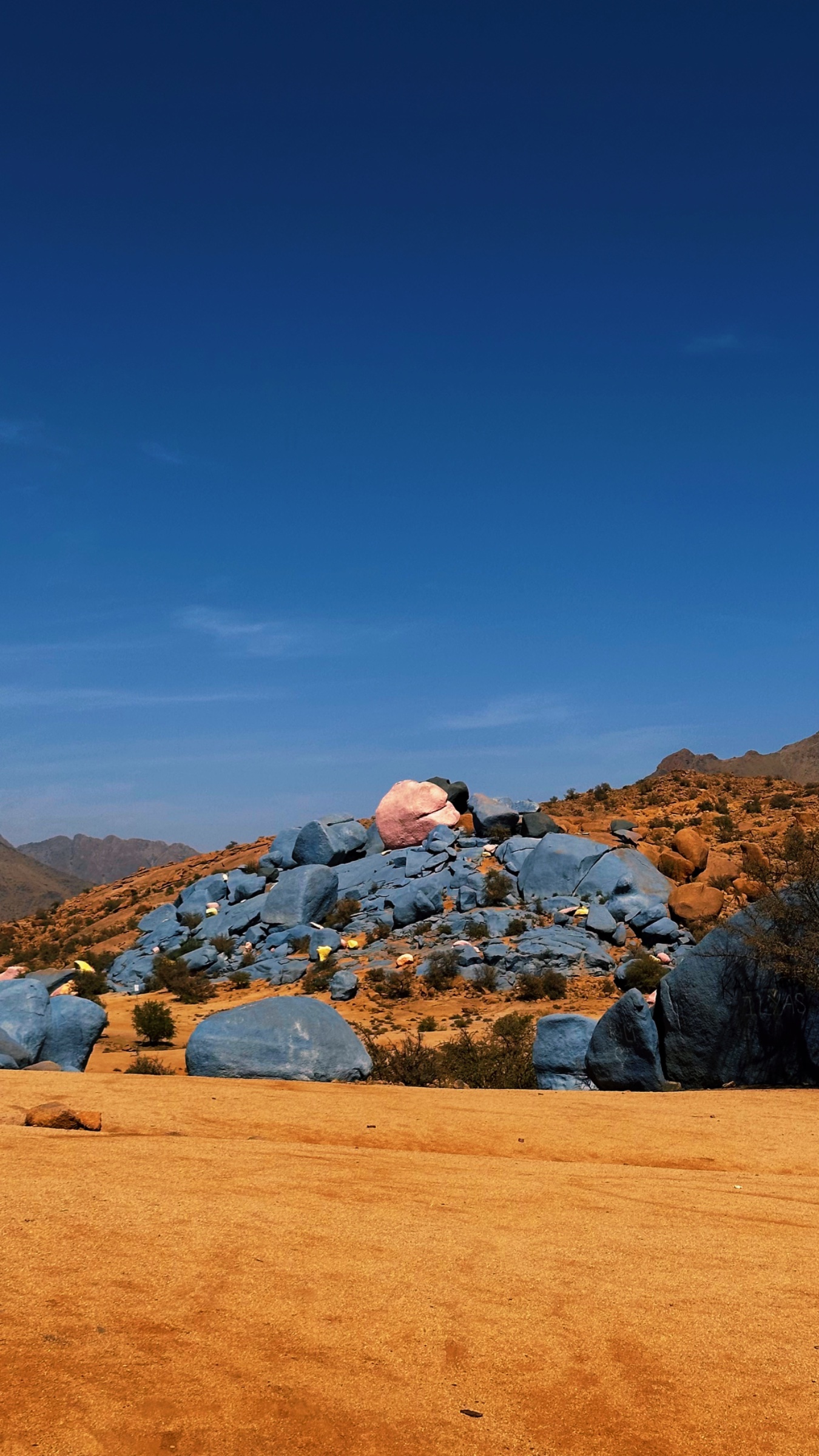
The rocks are enormous. Not “quite big” tourist attraction enormous. Proper giant granite boulders scattered across the landscape, painted in bright blue, red, yellow and orange against the dusty pink mountains around them.
It also feels oddly out of place, which is part of why it’s so good.
You’re standing in this rugged mountain landscape in southern Morocco and suddenly there’s this surreal art installation sitting in the middle of it all. It makes absolutely no sense visually, which somehow makes it even better, especially as you can climb over them and there are hundreds of them scattered all over.
The story behind them is actually really interesting too.
Back in 1984, a Belgian land artist called Jean Vérame came to the Anti Atlas Mountains to create the project as a tribute to his late wife. He got permission from the Moroccan government and local firefighters even helped spray-paint the huge rocks.
Over time, because of the heat, sun and desert winds, the paint naturally fades and peels back, so local guides and artists periodically repaint them to keep the installation alive.
There’s something quite nice about that. Not in a fake deep “art changes humanity” way. More just the fact that this completely random project from the 1980s is still being looked after by people nearby decades later.
Get new guides and posts in your inbox
No spam, unsubscribe any time.
Be the first to like this
No comments yet